CBD Oil for Pets: A Cautious Owner Guide
Thinking about CBD oil for a dog or cat? Start with veterinary guidance, label checks, THC and xylitol warnings, and a clear emergency plan.
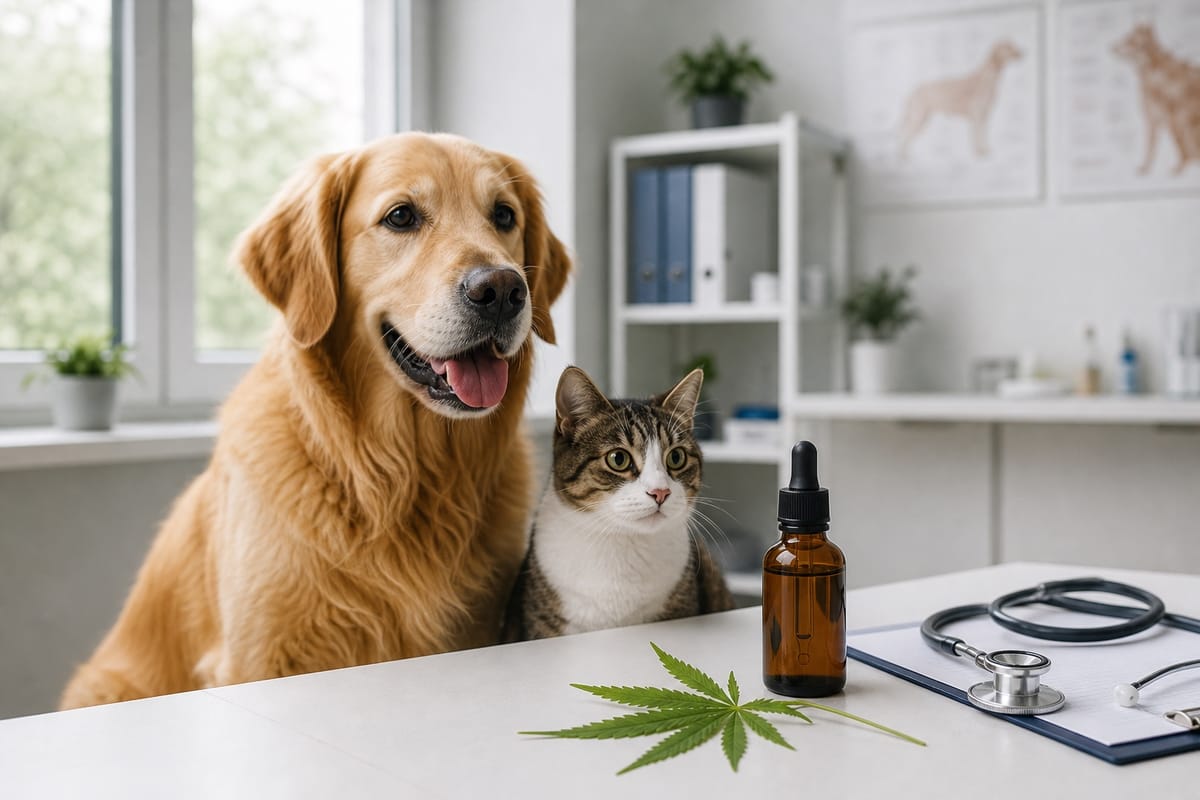
CBD oil for pets is easy to find, but easy to find does not mean proven, approved, or right for every animal. If you are considering a CBD product for a dog or cat, start with a cautious question: what problem are you trying to solve, and has your veterinarian ruled out a medical cause? Limping, hiding, appetite changes, vocalizing, accidents in the house, restlessness, and behavior changes can come from pain, infection, neurologic disease, dental disease, endocrine problems, toxin exposure, or stress. CBD should not be used to delay an exam or replace care that your pet may need.
What CBD is, and what it is not
CBD stands for cannabidiol. It is one of many compounds found in cannabis plants. Hemp is a legal category of cannabis that contains no more than 0.3 percent delta-9 THC by dry weight under federal law. THC is the compound most associated with marijuana intoxication. CBD does not cause the same high that THC does, but that does not make every CBD bottle safe for pets.
Pet CBD products may be sold as oils, drops, capsules, chews, or topical products. Some are labeled as isolate, broad spectrum, or full spectrum. Those terms are not a guarantee of safety. They describe the type of cannabis extract, not whether the product has been tested well, labeled accurately, or reviewed for your individual pet.
Regulatory reality for pet owners
The FDA explains that cannabis and cannabis-derived products, including CBD, remain subject to normal FDA rules. Hemp status does not remove FDA authority. The FDA has approved one CBD drug, Epidiolex, for certain seizure disorders in humans, but that does not mean over-the-counter CBD products are approved for pets.
For pet owners, the key point is simple: CBD oils, chews, and drops marketed for pets are generally not FDA-approved for animals. The FDA has raised concerns about unapproved therapeutic claims, unknown dosing, possible drug interactions, side effects, and people avoiding proven care. The AVMA also notes that human marijuana and hemp laws do not automatically apply to animals, and that evidence for animal use remains limited.
What is known and unknown
CBD is being studied in veterinary medicine. Some research areas may show promise, but that is not the same as settled proof for every species, condition, product, or dose. Studies often use specific formulations, controlled doses, and veterinary monitoring. Store products can vary widely in CBD content, THC content, contaminants, and quality control.
Be careful with claims that CBD relieves anxiety, pain, seizures, arthritis, inflammation, cancer, or other diseases as a fact. Those claims can push owners toward self-treatment when the pet needs a diagnosis. If your pet has seizures, worsening mobility, chronic itching, vomiting, appetite loss, sudden behavior changes, or signs of pain, ask your veterinarian about evidence-based options first. CBD questions can be part of that conversation, but they should not replace it.
Do not give human marijuana or cannabis products to pets
Never give a pet marijuana, THC edibles, vape liquids, gummies, brownies, candies, tinctures made for people, or any human cannabis product. Dogs and cats can be much more vulnerable to accidental dosing than people, and edibles may contain several hazards at once. THC exposure can cause serious signs, including wobbliness, sleepiness, agitation, vomiting, drooling, abnormal heart rate, low body temperature, tremors, urine dribbling, or seizures.
Xylitol, also called birch sugar, is another major concern. It may be found in some sugar-free gums, candies, baked goods, supplements, and human wellness products. Xylitol can be dangerous for dogs and should be treated as urgent. Human products may also contain chocolate, raisins, caffeine, alcohol, essential oils, high fat ingredients, or strong flavorings that are not appropriate for pets.
If you know or suspect your pet ate cannabis, THC, marijuana, a CBD product not meant for that pet, or anything containing xylitol, call your veterinarian, an emergency vet, or animal poison control right away. Do not wait for symptoms to become severe. Have the package, ingredient list, estimated amount, and time of exposure ready.
Before you buy, ask your veterinarian
A good CBD decision starts with your pet's health history, medications, age, species, weight, and diagnosis. Ask your veterinarian before using CBD if your pet is pregnant, very young, elderly, has liver disease, kidney disease, neurologic disease, heart disease, or takes medication for seizures, pain, anxiety, allergies, heart problems, or other chronic conditions. CBD may interact with other drugs, and side effects can be harder to spot in pets than in people.
State rules also vary. In some places veterinarians may be limited in what they can recommend or prescribe, even when they can discuss safety concerns. That is frustrating, but it is still worth asking what red flags to watch for, whether a product label makes sense, and whether your pet should be examined before you try anything new.
Product label questions to ask
If your veterinarian says a CBD discussion is reasonable, slow down and look at the label like a safety checklist. Ask these questions before giving anything to your pet:
- Is the product made for the correct species, or is it a human product being repackaged for pets?
- Does the label list CBD in milligrams per bottle and per serving?
- Is there a recent certificate of analysis from an independent lab for the exact batch number?
- Does the lab report list THC, including delta-9 THC, and screen for contaminants such as pesticides, heavy metals, mold, and residual solvents?
- Are xylitol, birch sugar, essential oils, chocolate flavor, grape or raisin flavor, caffeine, alcohol, and unnecessary flavorings absent?
- Does the company provide a lot number, expiration date, clear contact information, and complete ingredient list?
- Are the marketing claims conservative, or do they promise to cure, fix, prevent, or treat diseases?
A product with vague dosing instructions, no batch testing, missing THC information, or disease-cure language is a product to avoid. Price, pretty packaging, and social media testimonials are not safety data.
Dosing should come only from veterinary guidance
Do not calculate CBD dosing from a human label, a blog comment, or a friend's pet. Pets vary by species, size, body condition, metabolism, diagnosis, and medication use. A dose that appears mild for one animal may be inappropriate for another. If your veterinarian cannot provide a specific dose, ask whether there are safer alternatives or whether a referral, pain evaluation, behavior consultation, or diagnostic workup would be better.
If your vet agrees to a monitored trial, follow the plan exactly. Use one product at a time, measure carefully, keep the bottle away from pets and children, and write down dates, doses, behavior changes, appetite, stool quality, sleepiness, and any other changes. Stop and call your vet if you see concerning signs.
Side effects and emergency signs
Possible side effects reported or suspected with CBD products may include sleepiness, vomiting, diarrhea, changes in appetite, drooling, restlessness, or changes in liver enzyme tests. THC contamination or accidental cannabis ingestion may cause more serious signs. Because product quality varies, you may not know exactly what your pet received unless there is reliable batch testing.
Call your veterinarian promptly if your pet seems unusually sedated, weak, wobbly, disoriented, agitated, vomiting repeatedly, unable to stand, trembling, having seizures, breathing abnormally, or acting unlike normal. Call poison control or an emergency vet immediately for suspected THC, marijuana edible, xylitol, chocolate, raisin, alcohol, or essential oil exposure.
Support the problem, not the trend
Many owners look at CBD because their pet seems anxious, uncomfortable, or unsettled. It is understandable to want relief, but the safer path is to identify the cause. For behavior concerns, routines, enrichment, training, and veterinary guidance matter. If you are working on home-alone stress, start with practical pet separation anxiety tips and routines rather than assuming CBD is the answer.
It is also smart to plan for costs before a problem becomes urgent. Exams, diagnostics, toxin calls, and emergency visits can add up quickly. If you are comparing ways to prepare, this overview of pet insurance from a vet tech's perspective may help you think through emergency-cost planning.
Bottom line
CBD for pets is not a simple yes or no topic. It is a safety conversation. Evidence is limited, products are not FDA-approved for animals, labels may be unreliable, and human cannabis products can be dangerous. Before giving CBD to a dog or cat, ask your veterinarian what condition you are trying to manage, whether proven care is needed, what product risks matter most, and what emergency signs should prompt a call.