Top 5 Snake Enclosures: A Practical Housing Guide for Pet Snakes
A practical, buyer-focused guide to choosing snake enclosures, with safer picks for glass, wood-style, and PVC setups plus cautions about size, heat, humidity, locks, and ventilation.
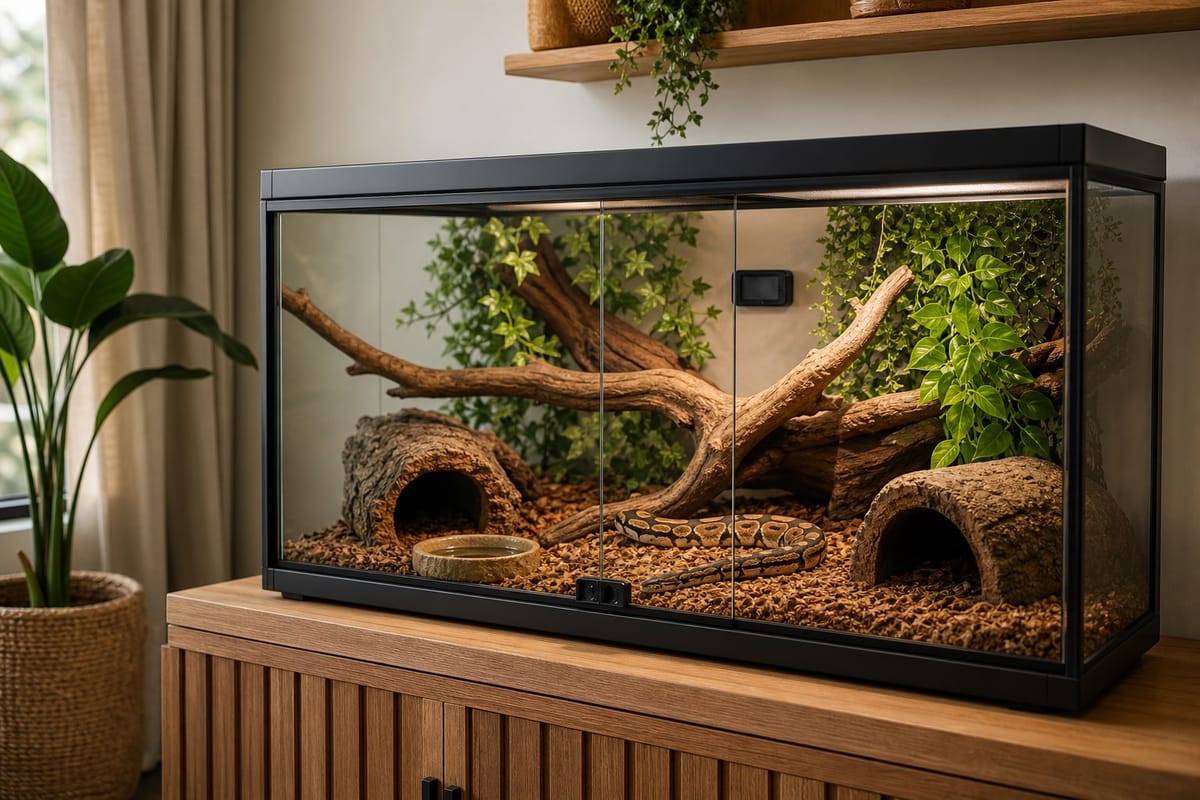
Choosing a snake enclosure is less about finding one perfect tank and more about matching the habitat to your snake's species, adult size, temperature needs, humidity range, and behavior. A corn snake, ball python, king snake, boa, and many arboreal species can all need very different setups, even when they look similar as juveniles.
As an Amazon Associate, Trusty Pet Supplies may earn from qualifying purchases.
This guide focuses on practical enclosure options that are easier to evaluate as a buyer. It does not replace species-specific care research, and it is not veterinary advice. Before buying, compare the enclosure dimensions against reputable care resources for your exact species, then check with a qualified reptile veterinarian or experienced keeper if you are unsure.
If you are still building your first setup, our first-time snake supplies guide is a helpful companion because the enclosure is only one part of the habitat. Heat control, hides, substrate, water, enrichment, and safe monitoring all matter.
Quick picks
- Best larger glass option: REPTI ZOO 67 Gallon Glass Front Opening Terrarium
- Best furniture-style display option: PROLEE larger wooden reptile enclosure, 40x20x20 65-gallon variant
- Best larger PVC-style direction: 4x2x2 120-gallon PVC reptile enclosure
- Best search path for size matching: front-opening glass reptile terrarium options
- Best search path for larger PVC builds: PVC 4x2x2 reptile enclosure options
What to check before buying a snake enclosure
Start with adult size, not baby size. Many snakes are sold young, and a tiny juvenile can make almost any starter enclosure look roomy. That does not mean the same setup will work long term. Look up the expected adult length, body build, climbing habits, and activity level for your species before committing to a size.
Next, think about heat and humidity. Snakes need a temperature gradient so they can move between warmer and cooler areas. Some species also need higher humidity than a heavily ventilated enclosure can easily hold. Glass, PVC, and wood-style enclosures can all work in the right context, but each material behaves differently with heat retention, airflow, moisture, and cleaning.
Security matters too. Snakes are strong escape artists when a door has a gap, a loose screen, or a weak latch. Front-opening doors are convenient, but they should close securely and work with a lock or clip when needed. Also check cable ports, ventilation slots, and any assembly seams.
Finally, consider daily use. Can you reach the water bowl without tearing apart the habitat? Can you clean substrate, adjust hides, and inspect the snake safely? A good enclosure should make routine care easier, not just look nice in product photos.
1. Best larger glass option: REPTI ZOO 67 Gallon Glass Front Opening Terrarium
The REPTI ZOO 67 Gallon Glass Front Opening Terrarium is a practical candidate for keepers who want the visibility of glass with front access instead of relying only on a top lid. Front-opening doors can reduce stress during maintenance because you are not always reaching down from above, which can feel threatening to some reptiles.
This style is especially worth considering when you want a clean display enclosure and need good viewing from the front and sides. Glass also makes it easy to monitor condensation, substrate condition, and general cleanliness. The tradeoff is that glass can lose heat faster than PVC or some wood-style builds, so thermostat-controlled heating and temperature monitoring are important.
Before buying, compare the dimensions with the adult needs of your snake. A 67-gallon enclosure may be generous for some smaller species and too limited for larger or highly active snakes. Also check whether the screen top and ventilation pattern will support the humidity range your species needs. If you keep a higher-humidity snake, you may need to modify the setup carefully while still preserving safe airflow.
2. Best wood-style display enclosure: PROLEE 40x20x20 larger wooden reptile enclosure
The PROLEE larger wooden reptile enclosure, 40x20x20 65-gallon variant is aimed at keepers who want something that looks more like furniture than a basic tank. A wood-style enclosure can be appealing in a living room or office, and the front viewing panel keeps the animal visible without making the entire enclosure glass.
Wood-style reptile enclosures can retain heat differently from glass, which may be useful in cooler rooms. They can also provide a more enclosed feel for snakes that do better with visual security. That said, moisture management is the big question. If your snake needs high humidity or frequent damp substrate, confirm the enclosure materials, sealing, and cleaning instructions before relying on it.
This kind of enclosure is best approached as a display-friendly option that still needs a careful habitat plan. You will want secure hides on both warm and cool sides, a water bowl that cannot easily tip, climbing or enrichment pieces appropriate to the species, and safe thermostat-controlled heating. Do not assume the enclosure alone solves husbandry. It is the shell that supports the habitat you build inside it.
3. Best 4x2x2 PVC-style option: 120-gallon PVC reptile enclosure
For many medium-sized adult snakes, a 4x2x2 footprint is a common larger-habitat direction to research. The 4x2x2 120-gallon PVC reptile enclosure is included here because PVC-style enclosures are often chosen for heat retention, humidity control, and long-term practicality.
PVC can be easier to manage for species that need stable warmth or moderate to higher humidity, though every build is different. Look closely at ventilation placement, door design, panel fit, and whether the enclosure can support your preferred heating and lighting equipment safely. With any PVC setup, heat sources should be used with an appropriate thermostat and arranged to create a proper gradient rather than a single overheated zone.
The 4x2x2 size is not automatically right for every snake. Some species need more floor space, some benefit from extra height and climbing structure, and some small species may feel exposed without enough hides and cover. Still, if you are planning beyond a starter tank, PVC is often worth comparing because it can be practical for keepers who want a stable, cleanable, long-term enclosure.
4. Best search path for smaller or species-specific glass setups
If you are shopping for a smaller snake, a juvenile grow-out setup, or a species with very specific dimensions, it may be smarter to compare several front-opening glass options instead of forcing one product to fit. This front-opening glass reptile terrarium search gives you a way to compare current sizes, door styles, ventilation, and prices.
When browsing, avoid choosing by gallon number alone. External dimensions, usable floor area, height, ventilation, and door security tell you more than the headline capacity. Read recent buyer photos and reviews for comments about gaps, damaged panels, difficult assembly, weak latches, and screen fit. For snakes, a small escape gap can be a real problem.
Also remember that a smaller enclosure still needs a complete environment. That includes at least two secure hides in most setups, appropriate substrate, a water dish, safe heat, a thermometer or temperature gun, humidity monitoring, and enough clutter that the snake can move without feeling exposed.
5. Best search path for larger PVC 4x2x2 enclosures
If you have already decided that PVC is the right material, compare multiple current options through this PVC 4x2x2 reptile enclosure search. Prices, shipping, assembly style, ventilation, door hardware, and included accessories can vary a lot.
Look for practical details. Are the doors sliding or hinged? Is there room for your heat source and thermostat probe placement? Are cable ports secure? Can the panels handle cleaning without swelling or warping? Is ventilation adjustable enough for your species without making humidity impossible to maintain?
A 4x2x2 enclosure can be a strong upgrade path, but it should still be matched to the snake. Large-bodied species may outgrow it, while nervous smaller snakes may need extra cover to feel secure. Build the interior around the animal, not around a bare display box.
When to skip screen cages
Open-air screen cages are popular for some reptiles, but they are usually not the best general choice for snakes. They can lose heat and humidity quickly, and many are designed more for climbing lizards than for snake security. A screen top on a glass terrarium is different from a full screen cage, but even then you should check that the lid locks tightly and supports the humidity needs of the species.
There may be limited situations where a screen-heavy enclosure is used temporarily or for a species with very specific airflow needs, but most snake keepers should be cautious. If you are considering one, get species-specific guidance first.
Final buying advice
The best snake enclosure is the one that fits your snake's adult size, climate needs, and daily care routine. For visibility and simple display, a larger front-opening glass terrarium can work well for the right species. For a furniture-style look, a sealed wood-style enclosure may be appealing if humidity and cleaning needs line up. For long-term heat and humidity stability, PVC is often worth researching carefully.
Before checkout, confirm the adult enclosure size recommended for your species, how you will create the heat gradient, how humidity will be maintained, and how the doors will be secured. If you are comparing reptiles beyond snakes, our beginner turtle guide shows how different reptile groups can have very different housing needs: First Turtle? Here's What You Need to Know.
Buy the enclosure as part of a whole habitat plan. A safe setup depends on the enclosure, heating, thermostat, hides, substrate, water, enrichment, monitoring tools, and regular cleaning all working together.