13 Cat Supplies and Tips for First-Time Cat Owners
Bringing home your first cat? Use this practical checklist for litter, food, scratching, toys, safety, grooming, and the small details that make the first week easier.
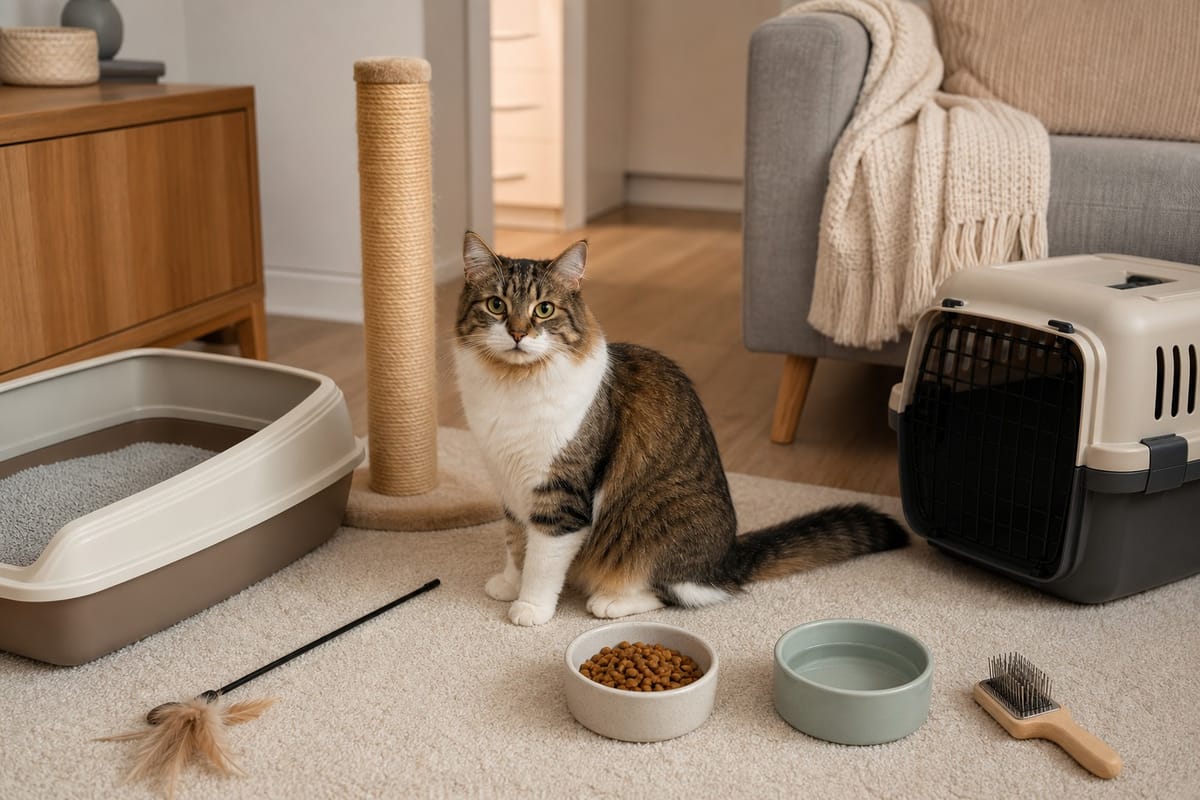
Bringing home your first cat is exciting, but the shopping list can get confusing fast. Cats are often called low maintenance, yet they still need the right setup to feel safe, use the litter box reliably, scratch in the right places, play, eat well, and settle into your home.
As an Amazon Associate, Trusty Pet Supplies may earn from qualifying purchases.
This guide keeps the list practical. You do not need every gadget in the cat aisle on day one. Start with the basics, choose products that are easy to clean and safe to use, and adjust once you learn your cat's habits. If you are still deciding where your cat will come from, our pet adoption process guide can help you prepare before pickup day.
1. A litter box your cat can actually use
The litter box should be large enough for your cat to step in, turn around, dig, and cover without feeling cramped. A good rule is to choose a box that is bigger than you think you need, especially for adult cats. Covered boxes can help contain scatter and odor, but some cats dislike feeling boxed in. If your cat avoids a covered box, try removing the lid before assuming they are being difficult.
If you want the box to blend into a room, a hidden style like this litter box planter option can be useful. Just make sure the inside still has enough space, airflow, and easy access for cleaning. Location matters too. Put the box somewhere quiet, easy to reach, and not right next to food or water.
2. Low-dust, unscented litter
Litter choice affects both your cat's comfort and your daily cleanup. Many cats do best with a low-dust, unscented clumping litter because strong perfumes can be irritating and dust can bother sensitive noses. If you are comparing options, start with a low-dust unscented clumping cat litter search or an option such as Dr. Elsey's Ultra litter.
Scoop daily and fully refresh the box on a regular schedule. If your cat suddenly stops using the box, strains, cries, goes in tiny amounts, urinates outside the box, has blood in the urine, or visits the box repeatedly without much happening, call a veterinarian promptly. Urinary issues can become serious quickly, especially in male cats.
3. A sturdy litter scoop
A flimsy scoop makes litter duty more frustrating than it needs to be. Look for a scoop with a strong handle, a firm edge for scraping the bottom of the box, and slots that let clean litter fall back through. A metal scoop like the iPrimio litter scoop can be easier to use with heavy clumps than a thin plastic one.
Keep the scoop near the box, but not where a curious cat can knock it into the litter. A small trash can or covered disposal container nearby also makes daily scooping easier to stick with.
4. Scratching surfaces
Scratching is not a bad habit. It is normal cat behavior that helps stretch muscles, mark territory, and maintain claws. If you do not provide good scratching spots, your cat may choose the sofa, rug, or door frame instead.
Offer at least one vertical scratcher and one horizontal option if you have room. Cardboard, sisal, and carpet all feel different, so your cat may show a clear preference. A cardboard scratcher or scratching post search is a simple place to start. Put scratchers near resting spots and near furniture your cat seems interested in, then reward use with praise, play, or a tiny treat.
5. Claw clippers and a calm nail routine
Scratching posts help, but many cats still need occasional nail trims. Overgrown claws can snag in fabric, curl toward the paw pad, or make normal handling uncomfortable. Choose small pet nail clippers, trim only the sharp tip, and avoid the quick, which is the sensitive pink area inside the nail.
If your cat is new to nail trims, do not try to finish all four paws at once. Touch one paw, offer a treat, trim one nail, and stop while things are still calm. A groomer or veterinary clinic can help if you are nervous or your cat panics. Declawing is not a simple nail trim. It is a major procedure, and many cat owners avoid it because of welfare and behavior concerns.
6. A breakaway collar, ID tag, and microchip
Even indoor cats can slip through a door, push through a screen, or bolt during a move. A collar and tag make it easier for a neighbor to contact you quickly, but the collar should be a breakaway style so it can release if it catches on furniture, fencing, or branches.
A microchip adds another layer of protection because collars can come off. Ask your veterinarian or shelter to scan the chip after adoption and confirm the registration information is current. The chip is only useful if your phone number and address are kept up to date.
7. Toys that let your cat hunt safely
Cats need play that lets them stalk, chase, pounce, and catch. Wand toys are especially helpful because they keep your hands away from claws and make play feel more like hunting. Browse an interactive cat wand toy search and choose something you can put away after playtime so strings and feathers are not swallowed.
Laser toys can be fun in short sessions, but never shine a laser in a cat's eyes. Some cats also get frustrated if they can never catch anything, so end laser play by tossing a physical toy or treat they can pounce on. Two short play sessions a day can do more for behavior than a pile of toys left on the floor.
8. Safe room access, not risky outdoor freedom
Cat doors can be useful, but think carefully about where they lead. An interior cat door can give your cat access to a litter area, laundry room, or safe retreat while keeping dogs or small children out. If that fits your home, compare options with an interior cat door search.
Exterior cat doors are a bigger safety decision. Outdoor access can expose cats to traffic, predators, parasites, fights, toxins, and getting lost. If you want outdoor enrichment, consider supervised time, a secure catio, or harness training instead of unrestricted roaming.
9. Complete cat food and fresh water
Your cat's daily food should be labeled complete and balanced for their life stage, such as kitten, adult, or senior. Cats are obligate carnivores, which means they need nutrients found in animal-based diets. Do not switch a cat to a vegetarian or homemade diet without veterinary guidance.
Wet food, dry food, or a mix can all work depending on your cat, budget, and routine. Keep fresh water available at all times, and wash bowls often. If your cat is not eating, is losing weight, vomiting repeatedly, or drinking much more than usual, check in with your vet.
10. Treats for bonding, not meals
Treats can help with bonding, training, nail trims, carrier practice, and rewarding good behavior. They should be occasional, not the main diet, and they are not nutritionally complete unless the package specifically says so. Keep portions small so treats do not crowd out balanced food.
If your cat likes crunchy treats, Temptations cat treats are one familiar option. Use them thoughtfully, especially if your cat needs weight control or has a medical diet.
11. Catnip or silvervine for enrichment
Catnip can make some cats roll, rub, play, or relax, but not every cat responds to it. Kittens often show little interest until they are older. If you want to try it, a small amount of organic catnip for cats sprinkled on a scratcher or toy is enough.
Also check your plants before your cat arrives. Lilies are especially dangerous to cats, and many common houseplants can be toxic. When in doubt, move plants out of reach and confirm they are cat-safe before bringing them back.
12. A brush or deshedding tool
Regular brushing helps reduce loose fur, mats, and hairballs, and it gives you a chance to notice skin irritation, fleas, lumps, or sore spots. Short-haired cats may only need light brushing, while long-haired cats may need a combing routine several times a week.
A deshedding tool such as this FURminator cat deshedding option can remove a lot of undercoat, but use it gently. Too much pressure or too many passes can irritate skin or thin the coat more than intended. If your cat gets annoyed, keep sessions short and end with something positive.
13. Hairball support and a watchful eye
Hairballs happen because cats swallow fur while grooming. Brushing, hydration, and a steady diet can help reduce them. Some cats also benefit from hairball treats or gels, but use those as directed and ask your veterinarian if your cat has frequent vomiting, constipation, appetite loss, or repeated gagging without producing a hairball.
Before the first week gets busy, choose a veterinarian, set up a carrier, and think through emergency costs. Pet insurance is not required, but it is worth understanding before a problem appears. Our guide to pet insurance providers and what they cover can help you compare the basics.
The best first-time cat setup is not the fanciest one. It is a clean litter area, safe identification, appropriate food, daily play, scratching outlets, gentle grooming, and a home where hazards have been checked before your cat arrives. Start there, then let your cat's personality guide the extras.